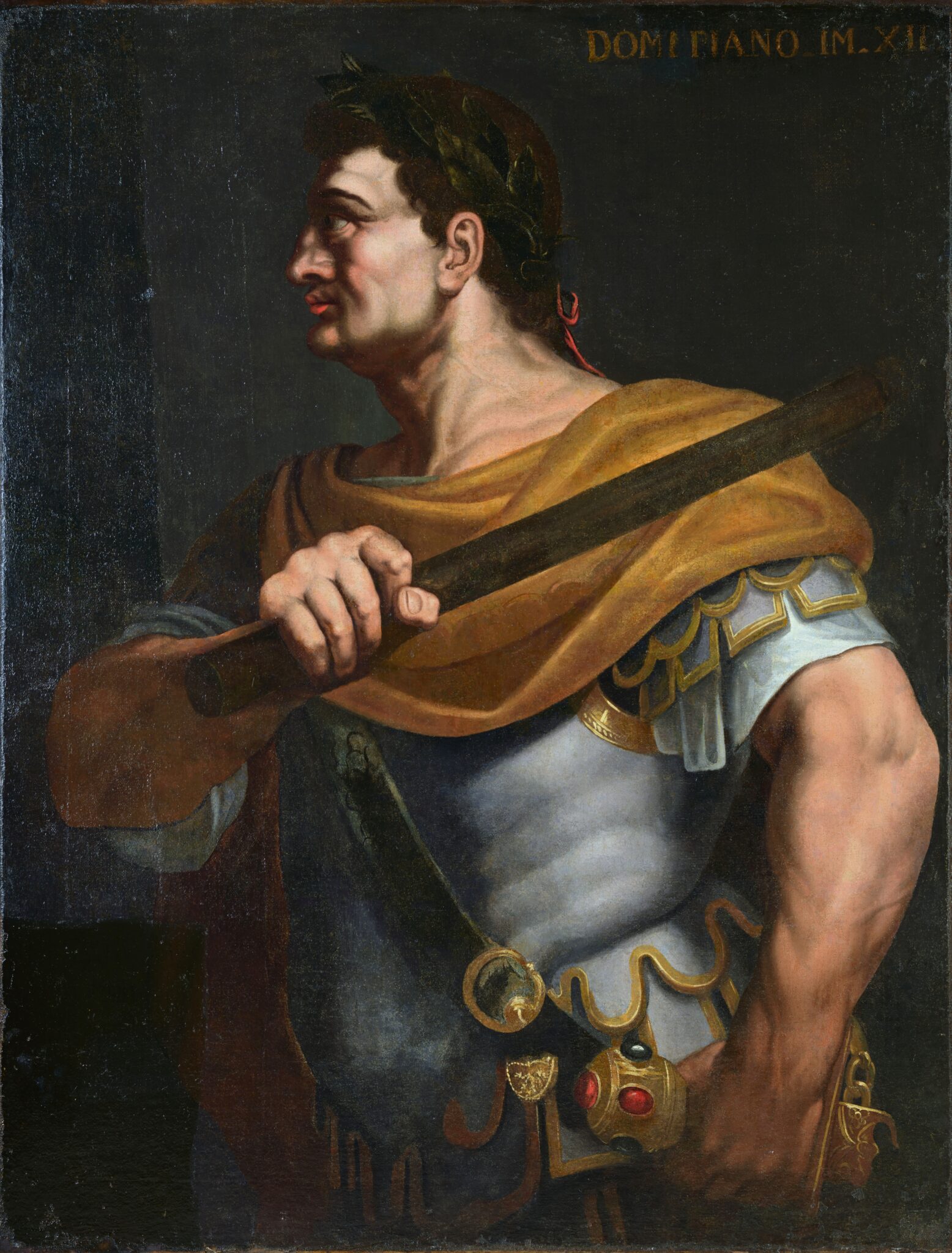
This platform serves as an active, living archive dedicated to the comprehensive technical and historical research surrounding the Domitian—a newly discovered Renaissance painting bearing the historic inscription “L da Vinci”. While the physical lettering is an empirically verified parameter, our core material data and historical provenance trails currently converge around a strong working hypothesis positioning the artwork within the immediate workshop tradition of Leonardo da Vinci, specifically pointing toward his closest pupil, Francesco Melzi, and the posthumous studio legacy. By continuously opening our data to art historians, scientists, and the public, we facilitate a transparent, evolving, and collaborative authentication process rooted in rigorous technical art history rather than subjective connoisseurship.
The Artwork at a Glance
Medium & Support: Oil on linen canvas, lined (102.5 x 133 cm)
Subject: The Roman Emperor Domitian.
Inscriptions: Bearing the signature inscription “L da Vinci” with the underlined addition “Pinxt” in the lower-left quadrant, inscribed “DOMITIANO.IM.XII” in the top-right corner, and bearing an ancient, partially removed historic mark in the bottom-left corner.
A Sovereign Rediscovery
Backed by independent art experts, recent connoisseurship and stylistic evaluations suggest that the painting represents a historic original rather than a reproductive copy—aligning its material and artistic execution with the lineage of the celebrated imperial series from the Ducal Palace in Mantua. For more information →
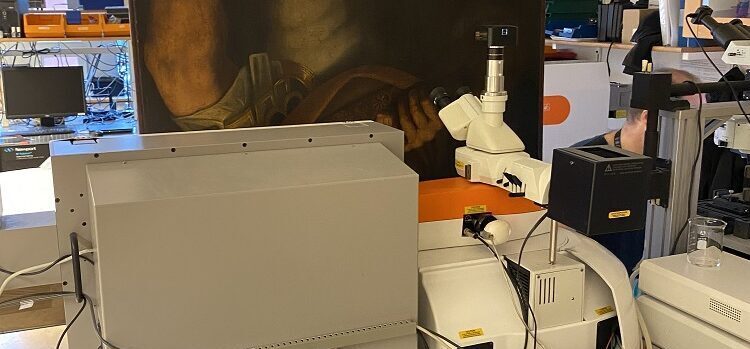
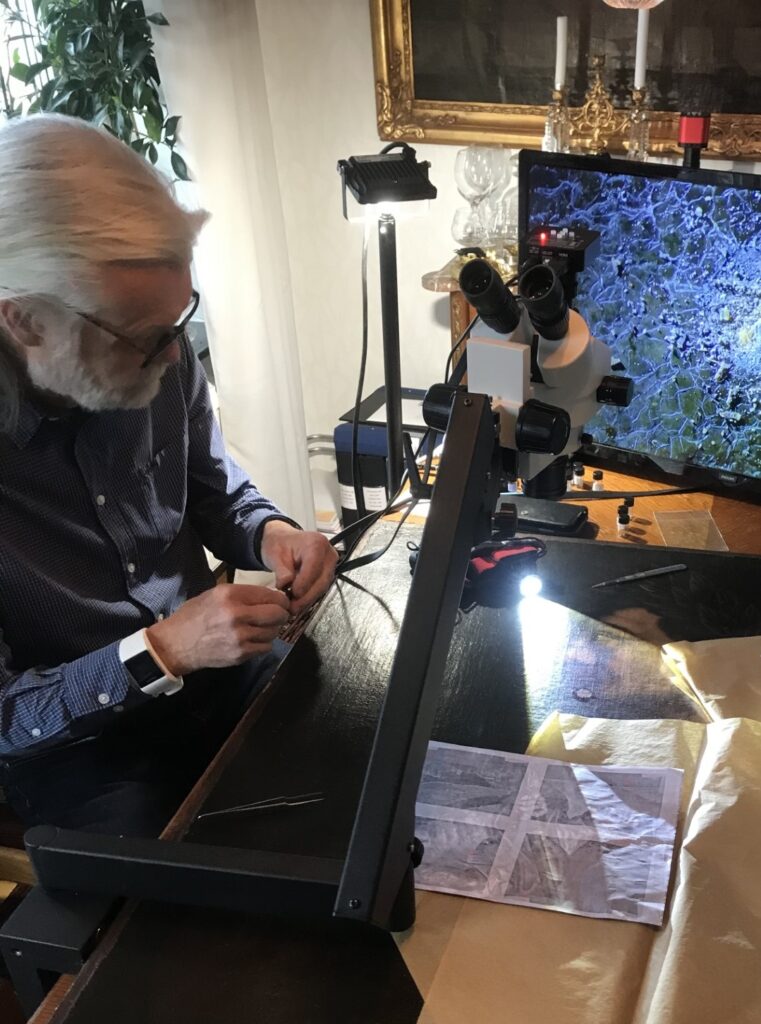
We invite you to explore the technical pillars below—ranging from Carbon-14 chronometry and micro-Raman spectroscopy conducted at Uppsala University, to digital radiography and historical provenance trails—which anchor this painting in the highest tier of Renaissance material culture.
Findings and Conclusions →