Epigraphic Typology and Historical Context
The portrait features the inscription ”L da Vinci” in the lower-left quadrant, with the underlined letters ”Pinxt” situated directly below. The term Pinxt is a standard Renaissance epigraphic abbreviation of the Latin Pinxit (”one painted”), a stylized amendment conventionally appended to the signature of the executing artist during the late medieval and Renaissance periods. This formal titling mirrors documented workshop traditions; for example, Leonardo da Vinci is recorded as having inscribed early graphic studies with the parallel abbreviation ”I des” (Io designato, or ”I drew this”).¹
Chronology of Discovery and Technical Analysis
The highly obscured inscription was first detected in 1994 under intense, focused illumination, as the physical lettering remains entirely imperceptible under ordinary ambient light conditions. Under concentrated light, only the final character (”i”) of the primary surname registers visually to the unaided eye. In 2019, a systematic, multi-disciplinary micro-analytical campaign was initiated to definitively isolate and evaluate the material composition and stratigraphical integrity of the lettering matrix.
Spectroscopic Pigment Verification
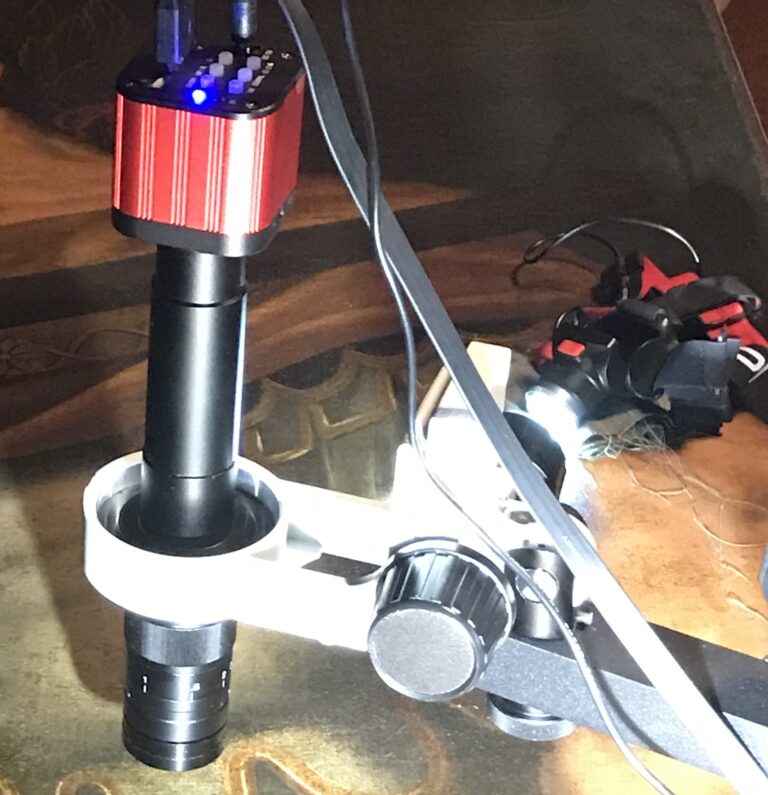
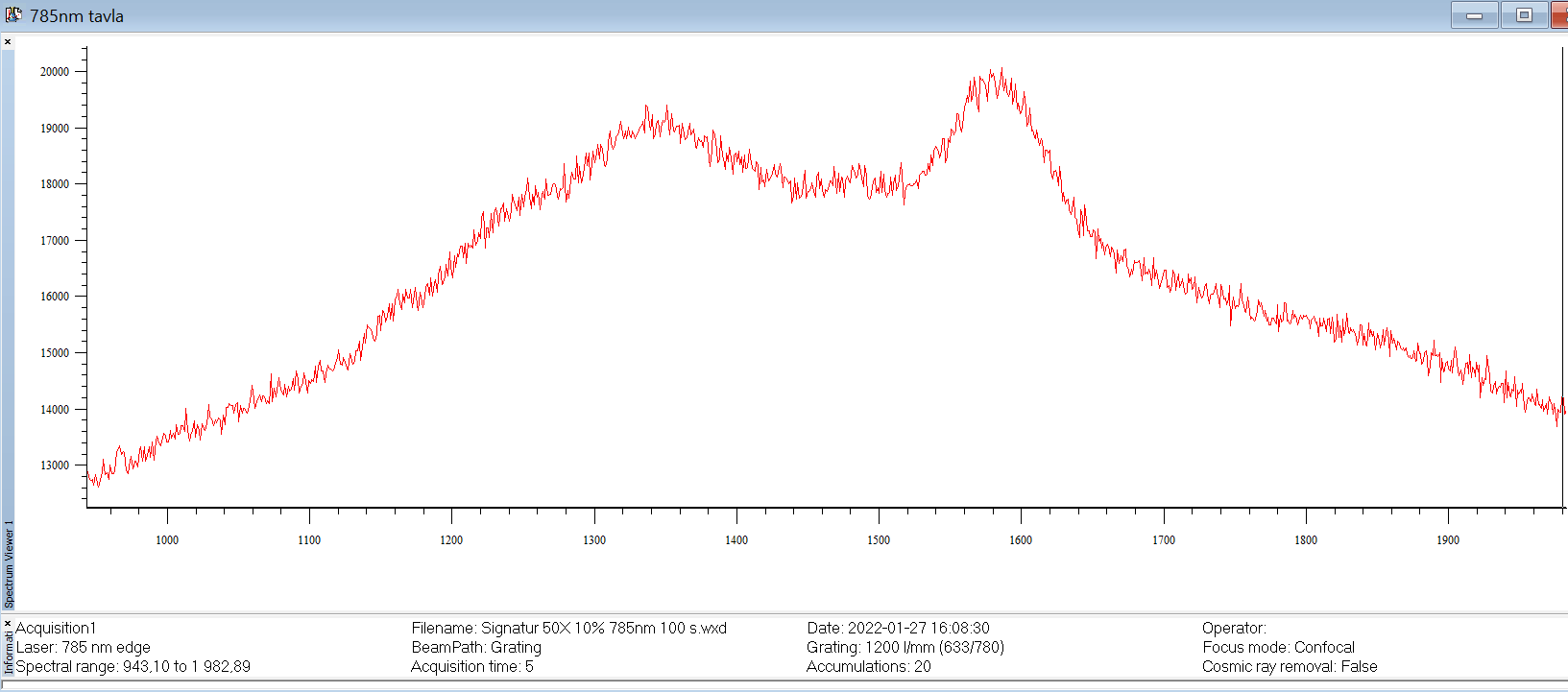
Independent micro-Raman spectroscopy executed at the Ångström Laboratory, Uppsala University, confirmed that the paint layer forming the characters contains a single, homogeneous pigment phase: carbon black. No modern synthetic colorants, aniline dyes, or post-Renaissance carbon variants were detected within the inscription matrix.
Structural Conservation Assessments
The physical status and structural authenticity of the signature quadrant have been subjected to rigorous, independent examinations by multiple accredited paintings conservators:
Ann-Marie Mild (Studio Västsvensk Konservering, Gothenburg): Infrared (IR) reflectography mapping isolates historical retouches elsewhere on the canvas, noting that no underdrawing became visible within the immediate inscription area under the analytical conditions. Her examination determined that nothing contradicts the lettering being an early historic component, confirming that the carbonaceous strokes reside securely beneath the existing strata of older historic varnish with no signs of modern surface retouching in the immediate text field. While leaving the exact historical window open regarding whether the inscription surfaced during an early, undocumented restoration or prior to it, the physical evidence places its execution prior to subsequent historical varnish interventions.
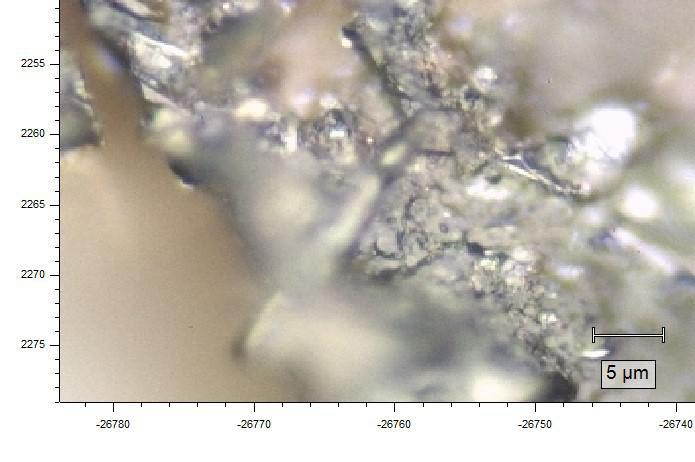
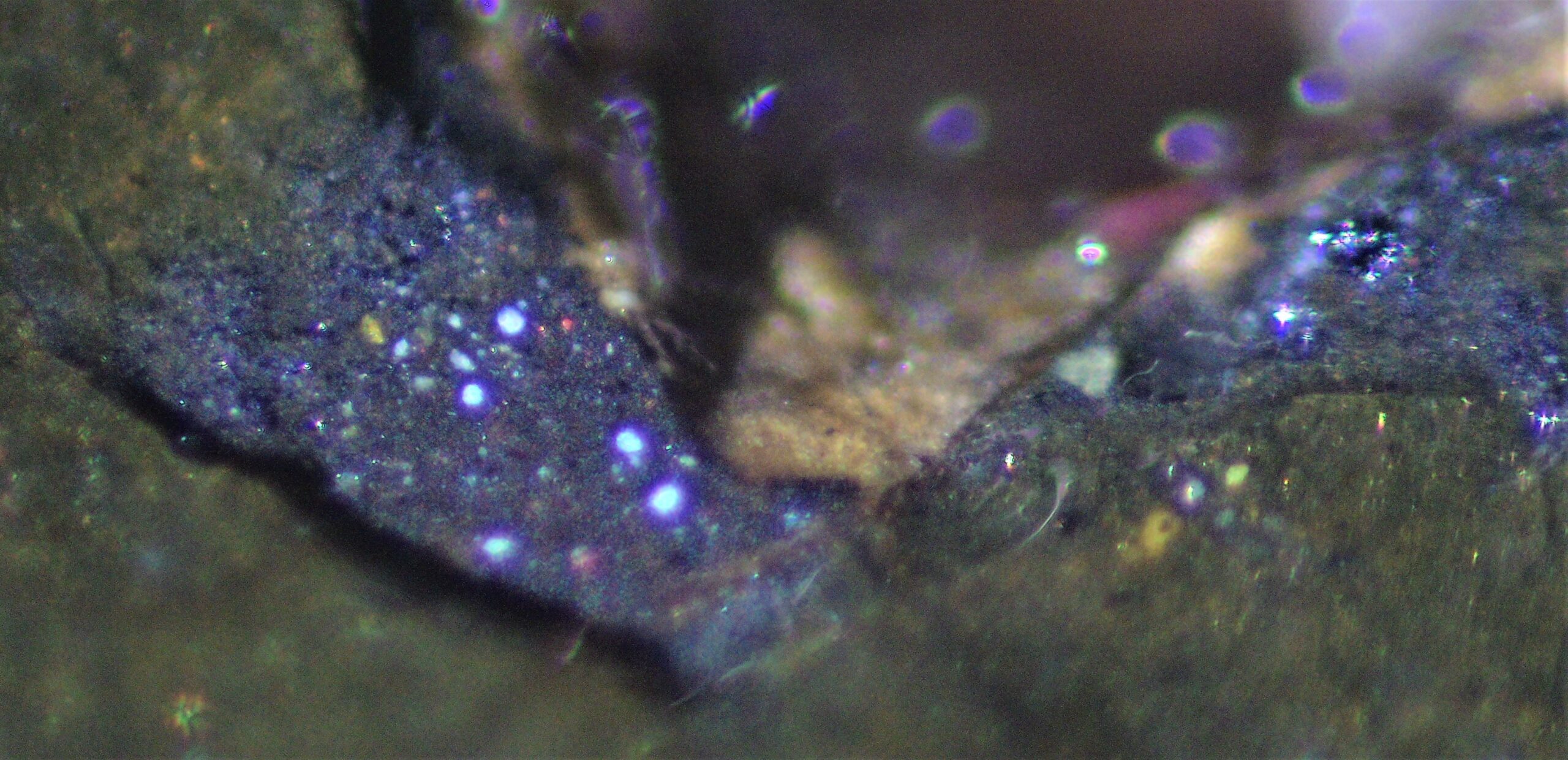
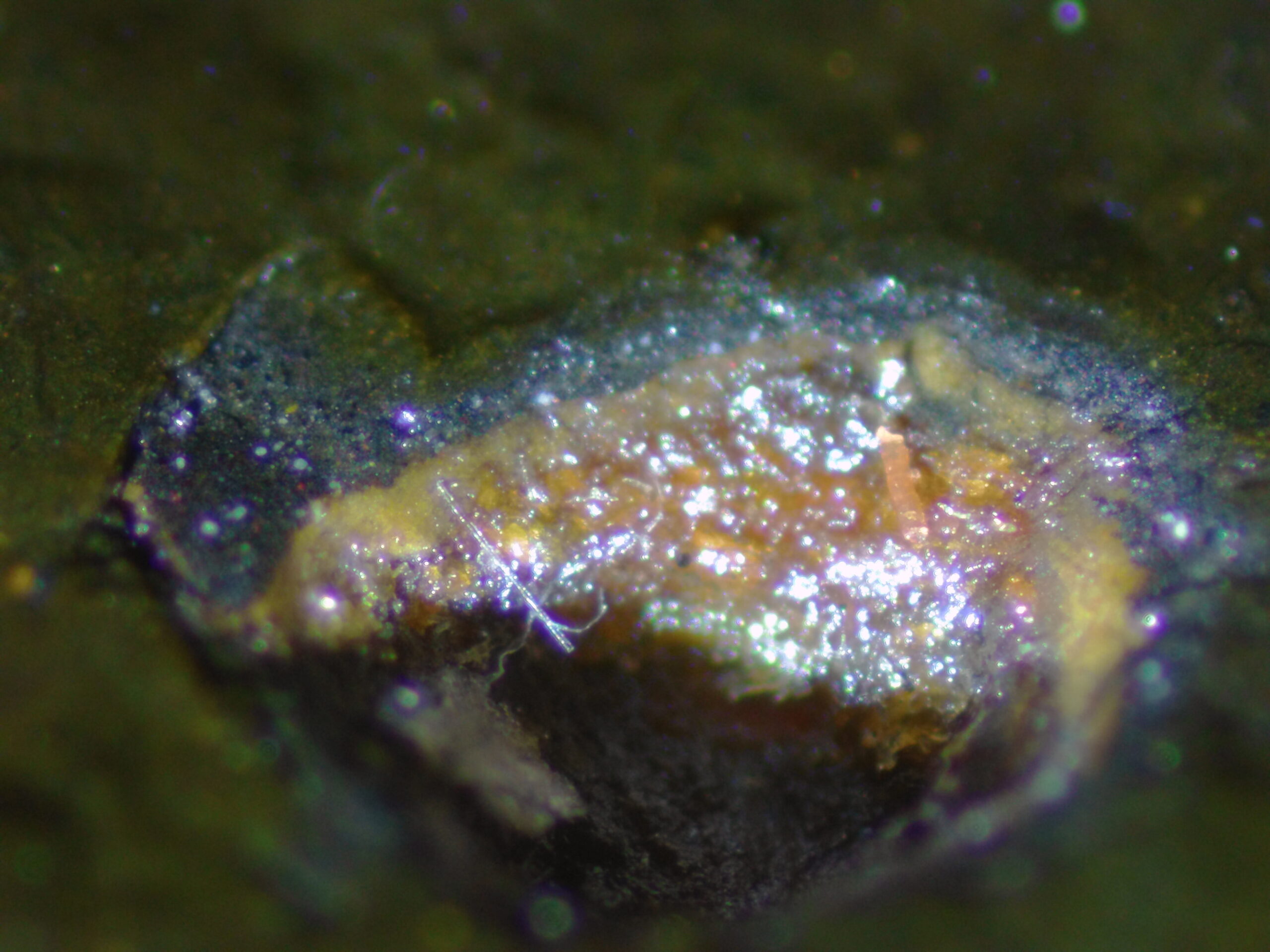
Nina Olivier (Stockholm): Comprehensive physical microscopy and conservation analysis independently validate that the carbonaceous signature paint is structurally integrated with the historic pictorial strata, residing beneath older varnish layers without indications of modern surface application. While her microscopic examination notes the inherent physical limitations of a localized reading through the micro-puncture, the recorded stratification supports an early historical sequence. Complementary documentation of the specific fracture geometry further clarifies these structural findings, reinforcing the position of the inscription prior to subsequent historical canvas interventions.
Footnote
¹ Raymond Stites. The Sublimations of Leonardo da Vinci. Smithsonian Institution Press, 1970, p. 10.
To address standard academic skepticism regarding historic inscriptions, the following technical commentary synthesizes the raw densitometric and stratigraphical data to establish the signature’s physical relationship with the primary canvas.
Section 1: Macro-Surface Anomalies and Textile Dynamics
To reconstruct the physical history of the lower-left quadrant housing the ”L da Vinci / Pinxt” inscription, macro-surface anomalies must be reconciled with deep stratigraphical metrics. While historical skepticism often assumes that Renaissance signatures are late additions painted over repaired or altered sections, the material reality of Version 1 contradicts this hypothesis through visible textile dynamics. High-resolution surface documentation reveals that the carbonaceous lettering is entirely interlocked with the raw topography of the authentic primary canvas.
Section 2: Microstructural Interstices and Wear Patterns
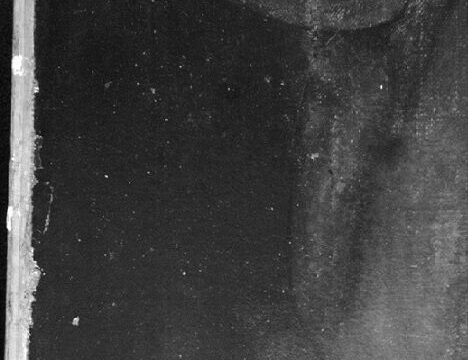
Microscopic and macro-analytical mapping confirms that the carbon black pigment resides exclusively within the structural interstices and valleys between the interlocking warp and weft threads. Crucially, the elevated, exposed tops of the linen weave are entirely cleared of pigment, demonstrating a natural wear pattern driven by centuries of surface friction and aging. Because a post-hoc or modern surface forgery would inevitably leave a continuous layer of synthetic paint across both the peaks and troughs of an aged support, this highly fragmented line anatomy serves as an unalterable material proof of authenticity. Furthermore, this distribution confirms that the signature zone is completely devoid of secondary repair putties, fillers, or textured conservation compounds that would otherwise mask the open, raw textile geometry.
Section 3: Subsurface Cross-Validation and Stratigraphy
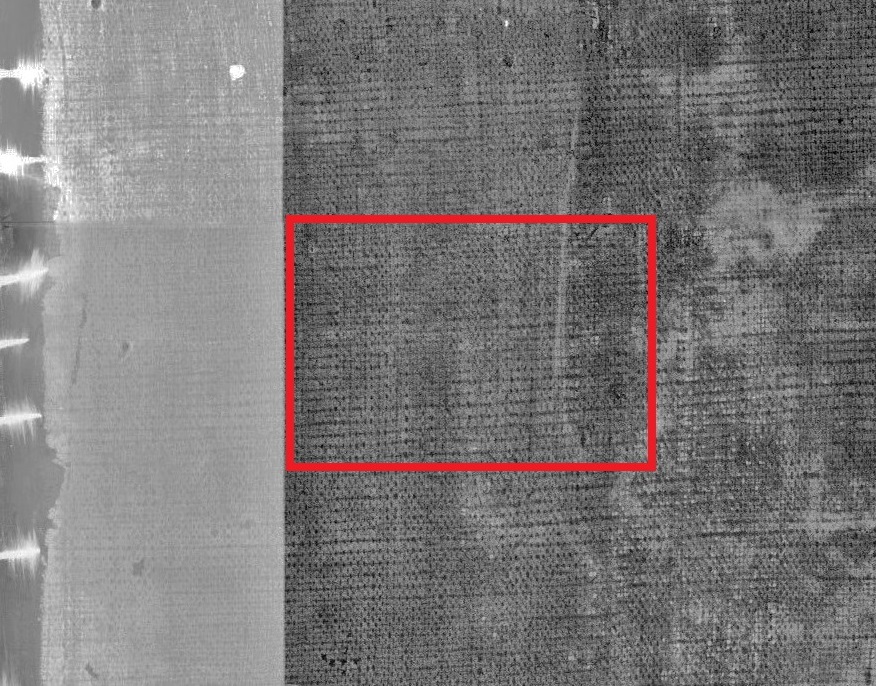
This raw, un-filled textile architecture is definitively cross-validated by deep subsurface metrics. High-magnification core profiling through the capital letter ”L” — executed during paintings conservator Nina Olivier’s 2023 microscopic analysis — records a pristine, continuous layer sequence (Linen Support → Translucent Red-Brown Ground → Yellow-Beige Stratum → Brownish-Pink Pictorial Layer → Heterogeneous Carbon-Based Signature Paint → Historical Dammar Varnish) with zero synthetic adhesives or putties present between the strata. Simultaneously, comprehensive X-ray densitometry exposes a perfectly uninterrupted, low-density weave pattern across the entire signature quadrant, showing none of the heavy, radiopaque white masses that identify structural fills or composite overpaintings. The signature is thus physically and chronologically bound to the primary, unaltered life history of the canvas.
Section 4: Radiographic Transparency and Atomic Weight
Furthermore, the signature’s radiographic transparency on industrial X-ray plates aligns with high-purity carbon matrices. Carbon-based pigments possess low atomic weights and low X-ray absorption compared to heavy lead matrices, meaning its absence on the radiograph is physically expected and verifies it is not a heavy modern surface addition.
Technical Conclusion
The uninterrupted structural geometry of the textile foundation beneath the inscription demonstrates that the signature resides upon a primary, completely unaltered section of the historic canvas. By demonstrating that the micro-grained carbon pigment is mechanically interlocked deep within the original paint layers, the empirical documentation provides no material support for hypotheses of secondary surface application. Residing securely beneath centuries of naturally degraded dammar varnish, this configuration substantiates that the signature is an early, structurally integrated material component of the painting’s early history, entirely consistent with historic studio parameters.